Posts

Showing posts with the label pesach

Pour Out Your Wrath/Love

Image
Sermon: 8 th Day of Pesach, Rabbi Esther Hugenholtz Pour Out Your Wrath/Love What do we do with anger?  Anger is an important and defining emotion in the Hebrew Bible and we might be inclined to recoil from it. The Israelites get angry, Moses gets angry, God definitely gets angry. In our contemporary politeness, we may not always know how to meet that anger and there may be a real philosophical disconnect between the source of anger and its expression.  God identifies as ‘El Kana’, a zealous God, and this may only layer onto our discomfort with the notion of anger and retribution. What human behavior merits God’s wrath? I suspect all of us here would reject such toxic theology outright. We scrub and sanitize our texts or obfuscate their meaning. But how intellectually honest is it? Meanwhile we sit with the anger radiating off the pages of our tradition. By ignoring or dismissing anger, we are not examining its sacred mechanism. Just like in the human psy...

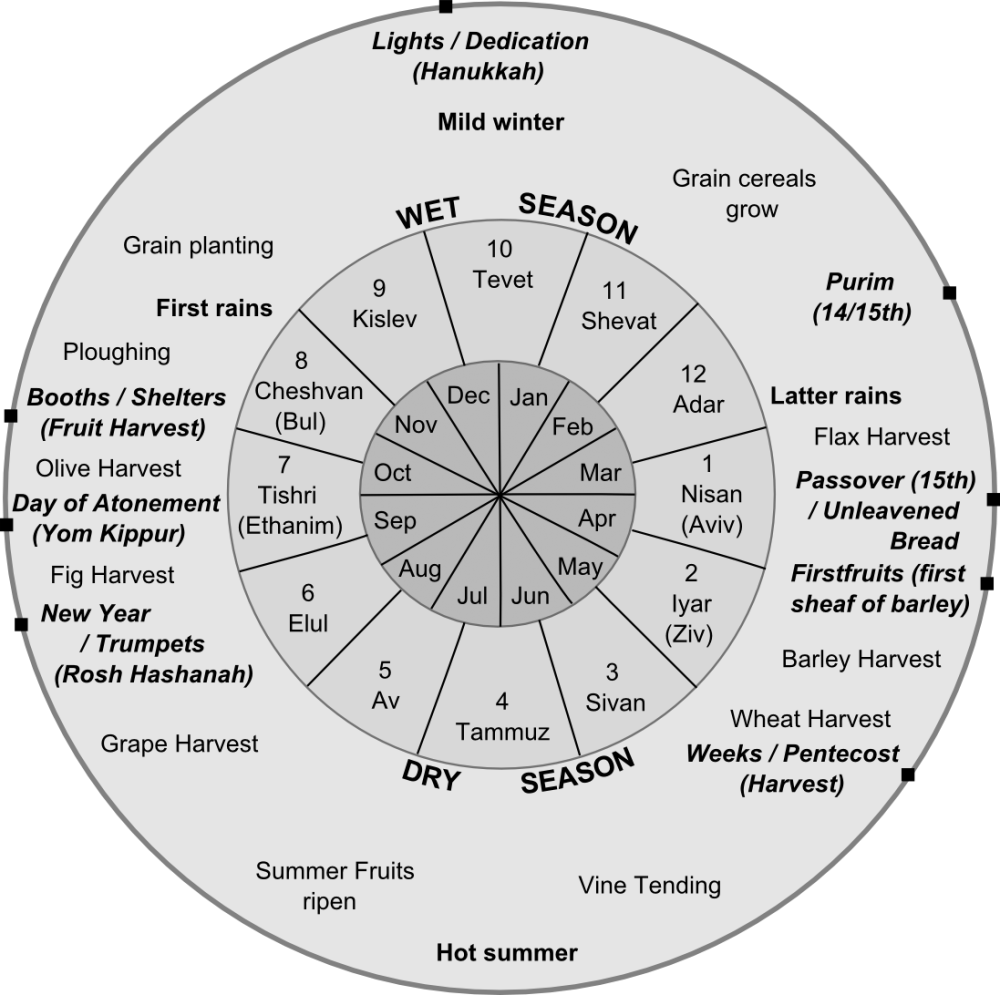
Tell Your Own Story (Pesach Sermon)

Image
Tell Your Own Story Rabbi Esther Hugenholtz Pesach is many things to many people: memory, message, meaning, food, tradition, song or a call to justice, action, and transformation. Regardless how Pesach may resonate with you in your own life, give yourself a unique Pesach gift: the blessing of telling your own story. This can be interpreted literally of course: we tell the stories of our ancestors at our Seders, just we chant Hallel, the festive psalms, at our Festival services. From Kiddush to Chad Gadya, from Maggid to Nirtza there is plenty of story and song. We can also, however, transcend the literal understanding and look at a deeper meaning: what does it mean for us to tell our  own  story? The word Haggadah means ‘the telling’. It’s interesting that our tradition has chosen this word when other terms would have fitted too: ‘Limmud’, ‘the learning’ would have been adequate – after all, the Seder has an undeniable pedagogical methodology through its melodies, f...

Let's Take It Personally

Shabbat Chol haMo’ed Pesach 2017 Rabbi Esther Hugenholtz Let’s Take It Personally I don’t do this often because who wants a rabbi who abuses the pulpit in order to inflict smarmy tales of domestic bliss upon her congregation? Yet, I can’t resist: watching my two toddlers sing Mah Nishtanah at the Seder table was possibly one of the greatest sources of naches that I’ve been privileged to experience as a young Jewish parent. I fully admit, I’m a fool for Pesach. I love Spring, I love the ‘thickness’ of the ritual and culture of the festival and I love cooking and hosting. A dear friend of mine spent part of the holiday with us and the three of us cooked a storm and our family enjoyed a Seder with all the trimmings: chicken soup with kneidlach, glazed brisket, quinoa salad, potato salad, egg salad and more (and you can probably guess where I’ve lingered on the kitniyot debate!) Once seated, I feasted my eyes on a beautifully set table, as I’m sure as many of you have, and s...

Turn, Turn, Turn

Image
Parashat Vayikra/HaChodesh  Rabbi Esther Hugenholtz  Turn, Turn, Turn  How many of you paid attention to yesterday’s solar eclipse? I was getting excited about the whole thing but my physicist husband’s response was surprisingly lackluster: ‘big deal, it’s the moon moving in front of the sun, and that’s that’. Now, don’t get me wrong: my very scientific husband has an insatiable curiosity and a deep respect for the natural world.  As I pondered his response and realized how very modern it is—not ‘modern’ as in ‘new’, but modern as in embracing a post-Enlightenment, rationalist, empiricist worldview. He is right, of course: all a solar eclipse is the moon blocking the sun.  I trained as a scientist too—a social scientist. And so I’m interested in social phenomena: how have people throughout the ages responded to solar eclipses? With great fear and dread. See, it is only human nature to want to see patterns and omens in Nature and the line betwe...

Love is in the Air

Sermon Shabbat Chol haMoed Pesach  Rabbi Esther Hugenholtz  Love is in the Air  When I wrote this sermon on Friday, the sunlight was streaming through my open window, bringing in the sounds, sights and smell of Spring. Roundhay Park looks resplendent in green and gold as does our own synagogue’s cherry tree in our beautifully-maintained garden (thank you, Ken Ellis!) I went to Harewood House on my day off with a friend and saw sheep and lamb cavorting in the lush grass. It’s an idyllic and supremely romantic season. In short, ‘love is in the air’.  There’s always that wonderful feeling to energised freshness that comes with Spring. That delightful feeling of leaving the house without your coat on and feeling the sun on your skin. It’s a time for love, for appreciating the bounty of our good Earth and the beauty of life. Of course, there is great darkness and difficulty in our world and we certainly shouldn’t close our eyes to that, but Pesach can be s...

The Pesach Perspective

First Day Pesach  Sermon Rabbi Esther Hugenholtz  The Pesach Perspective   A number of years ago, the diagnosis of a curious disease was formulated. The symptoms can be defined as follows, and I quote: "[Affluenza is] a painful, contagious, socially transmitted condition of overload, debt, anxiety, and waste resulting from the dogged pursuit of more."  Now, we can be inoculated by the winter influenza bouts but getting immunised against Affluenza is considerably more difficult. A lethal manifestation of Affluenza took the lives of four innocent pedestrians when a Texan ‘rich kid’, Ethan Couch, high on beer and valium, drove into them in last June. As devastating as this accident would be in any case, it was made all the more so by the law’s initially callous response: the millionaire teen’s psychologists and lawyers were quick to plead mercy, claiming that what the young man needed was not prison, but therapy in a 400,000$ a year rehabilitation centre...

Pesach Resources + Six Seder Questions

Image
I've collected some Pesach resources to share. Some of these are (British) Reform Movement resources and some of them are Conservative/Masorti Movement resources. I hope you will find them useful! - Spice up your Haggadah with an insert discussing social justice and modern slavery . Published by Tzedek and Jhub , this colourful source sheet is perfect for printing off and using on Seder night. Slavery is not just a metaphor but a painful reality of our world.  - Want the know-how on Pesach and Seder from a (British) Reform perspective? The Movement for Reform Judaism has brought together these resources.  - To eat kitniyot (legumes) or not to eat... that is the question! My esteemed colleague Rabbi Michael Hilton has written a responsum from a Reform perspective on the matter. - Need a contemporary and reasonable Halakhic guide to keeping Passover and kashering your kitchen? See the Conservative Movement's ' Passover Guide '.  - For those intere...

#pesachunplugged - Passover social media fast!

Image
For the third year running, I'll go on a 'social media fast' this Pesach. It started when I read an article about Christians going on a social media fast during Lent. This inspired me: couldn't we in the Jewish community try a similar idea during Passover? The Haggadah encourages us to experience the Exodus for ourselves: what things are we slave to and what experiences of personal liberation would we want to go through? The answer is complex, of course, but a small and easy step we could take is to disconnect from the 'slavery' of the Internet for a week.  So, without further ado, join me in my Pesach Social Media Fast from Monday April 14th (evening) till Monday April 21st. No Facebook, Twitter or whatever your platform of choice is. Unplug, unwind, reconnect with the things that matter. Build community in the flesh, reflect on the message of freedom and re-engage renewed. Who's joining me? Wishing you all a liberating and meaningful...

Exodus - Movement of Jah People!

This article appeared earlier in the Sinai Chronicle. Exodus – Movement of Jah People When I was a teen, I listened to a lot of Bob Marley. I was an avid Reggae fan and even paid homage to his grave when I visited Jamaica on a family vacation. What I loved about Bob’s music, apart from the irresistible rhythms and melodies were his spiritual, Biblically-inspired lyrics. For people the world over, black and white, rich and poor, young and old, Bob Marley’s rousing words rang like a Prophetic call to social justice and transformative faith. In one of his most popular songs, ‘Exodus’, Bob sings the following in his Jamaican Patois: “Open your eyes and look within: are you satisfied with the life you’re living?” Although Bob Marley was not Jewish, he echoes the sentiments of the Haggadah which tells us to every generation is to regard themselves as if they personally had exited Egypt: ‘chayav adam lirot et atzmo ke’ilu hu yatza mimitzrayim’. What is remarkable about this commandment, roote...

Farao in het centrum van de macht

Image
image credit: google Dit artikel verscheen eerder in het Pesach-nummer van Levend Joods Geloof. Farao in het centrum van de macht In de hagada vertelt Rabban Gamliel, een beroemde geleerde uit de Misjna, ons dat ieder van ons in elke generatie verplicht is zichzelf te beschouwen alsof hij of zij persoonlijk uit de Egyptische slavernij is verlost. Hiermee zegt de joodse traditie dat deze niet alleen draait om mooie verhalen en abstracte concepten, maar dat die ook toetsbaar hoort te zijn aan onze hedendaagse ervaringen. In het welvarende Nederland lijkt deze opdracht moeilijk te vervullen. We leven vooralsnog in voorspoed en democratie (en moeten ons als joodse gemeenschap actief inzetten om deze waarden te bewaken). Hierdoor verwordt het gebod uit de hagada echter al snel tot een oefening in abstractie. Toch is dit jaar anders dan voorgaande jaren. De metafoor haalt de werkelijkheid in. Life imitates art, als het ware. De revoluties in de Arabische wereld laten ons zien dat ook hedend...