Posts

Do We Trust The Torah?
Image
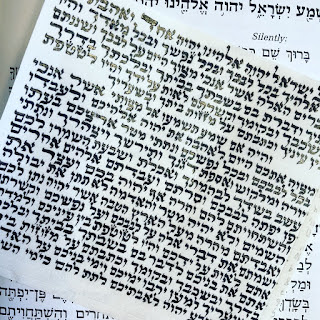
Parashat Mishpatim 2018 Rabbi Esther Hugenholtz Mezuzah written by Rabbi/Soferet Yonah Lavery-Yisraeli Do We Trust The Torah? Can you think of a moment in your life when you decided to trust the Jewish tradition? Sharing a personal perspective, I can cast my mind back to a moment when I was asked to trust a sacred and transformative moment. It was during my conversion ceremony. Prior to my immersion, I was asked by my sponsoring rabbi the following, to which I was called to reply. ‘Have you come here of your own free will?’ ‘Yes’. ‘Do you pledge allegiance to the God of Israel?’ ‘Yes.’ ‘Do you pledge allegiance to the Torah of Israel?’ ‘Yes’. ‘And do you pledge allegiance to the People of Israel?’ ‘Yes.’ Answering yes to that triad of questions was emotionally powerful in a way that transcended the legal underpinnings of the procedure (even sharing it now still moves me). Of course, establishing informed consent was a legally binding and necessar...

What Happened At Sinai Stayed At Sinai

Image
Parashat Yitro 2018 Rabbi Esther Hugenholtz What happened at Sinai stays at Sinai? What happened at Sinai? It depends who you ask, of course. The Biblical literalist will recount the Exodus account, word-for-word, and rely on its unwavering testimony. From aleph to tav, every word is given ‘mi’Sinai’, from Sinai, and although Scripture is to be interpreted, explained and examined, its ultimate Divine authority and authorship is not to be challenged. Then there is the militant secularist’s position. The Bible, a mere collection of sloppily edited Bronze Age myths, outdated and outmoded, with little relevance to our contemporary lives. In the words of Richard Dawkins, renown biologist and passionate atheist evangelist: “Much of the Bible is… just plain weird, as you would expect of a chaotically cobbled-together anthology of disjointed documents, composed, revised, translated, distorted and 'improved' by hundreds of anonymous authors, editors and copyists...

HaShirah haZot - This Song

Image
Sermon Parashat Beshallach 2018 Rabbi Esther Hugenholtz HaShirah HaZot – This Song ‘ Az yashir Moshe u’vnei Yisrael et hashirah hazot ’ – ‘then Moses and the Children of Israel sang this song.’ Thus opens chapter 15 of the Book of Exodus, otherwise known as the Song of the Sea, the oldest Biblical text of our entire canon. Many of us will be familiar with the ‘Shirat haYam’, the Song of the Sea. Despite its ancient, convoluted, poetic Hebrew, we are familiar with threads of it, woven into the tapestry of the liturgy. ‘ Ozi v’zimrat Yah, vayehi li lishuah ’ – ‘the Eternal is my strength and might, he is my deliverance’ is a staple of summer camps and spiritual gatherings where its well-known contemporary melody makes for beautiful harmonies. ‘ Adonai yimloch le’olam va’ed ’ – ‘the Eternal shall reign forever’ is a theological proclamation that is seeded across our liturgy. ‘ Mi chamocha ba’elim Adonai ’ – ‘who is like You, among the gods?’ is sung with gusto by cong...

Our God is Marching On

Image
Parashat Va’era 2018 Rabbi Esther Hugenholtz Our God is Marching On “ Ani Adonai, va’era el Avraham, el Yitzchak, v’el Ya’acov, be’El Shaddai, ushmi Adonai lo nodati lahem .” – “I am the Eternal, Who appeared before Abraham, Isaac and Jacob as El Shaddai but I did not make Myself known to them by My Name YHWH.” (Gen. 6:3). At face value, this statement speaks to a theological reality: a notion of progressive revelation. God’s Name YHWH, which we could inadequately translate as ‘IsWasWillBe’ was not revealed to the Patriarchs but is now revealed to Moses and the Israelites. Let us consider a possible and timely interpretation that is not primarily about theology; at least not in the classical understanding. God’s revelation of God’s own Name is not mere philosophical abstraction: it is deeply embedded in relationship. We will skip ahead a few verses: “ Vayedaber Moshe ken el B’nei Yisrael, v’lo shamu el Moshe mikztor ruach um’avodah kashah ” – “But when Mo...